EmpirioLabs हर प्रमुख प्रयोगशाला से 100 से अधिक एआई मॉडल चलाता है और नए लोगों की एक लंबी सूची है। यह प्लेटफ़ॉर्म को एक सरल प्रश्न पर एक उपयोगी सुविधाजनक बिंदु बनाता है: पूरे फ़ील्ड के साथ एक बिल पर उपलब्ध है और कोई लॉक-इन नहीं है, डेवलपर्स वास्तव में कौन से मॉडल चुनते हैं?
हमने यह पता लगाने के लिए पूरे मंच पर वास्तविक उपयोग को देखा। उत्तर सुसंगत है, और एक मामले में वास्तव में आश्चर्यजनक है। डेवलपर्स नई पीढ़ी की प्रयोगशालाओं से तेज, सक्षम मॉडल के एक छोटे से सेट पर अभिसरण कर रहे हैं, और वे सबसे बड़े ब्रांड नाम तक पहुंचने के बजाय उन्हें योग्यता के आधार पर चुन रहे हैं।
विधि पर एक नोट: नीचे दिया गया प्रत्येक आंकड़ा वास्तविक, एकत्रित प्लेटफ़ॉर्म ट्रैफ़िक से लिया गया है और प्रतिशत के रूप में दिखाया गया है। जहां हम वरीयता पर चर्चा करते हैं, हम प्रत्येक निर्माता द्वारा पेश किए जाने वाले कितने मॉडल के खिलाफ उपयोग को सामान्य करते हैं, इसलिए संख्याएं दर्शाती हैं कि डेवलपर्स क्या चुनते हैं, न कि केवल शेल्फ पर क्या होता है।
चुनने के लिए 100+ मॉडल के साथ, उपयोग कुछ पर निर्भर करता है
डेटा में पहला पैटर्न एकाग्रता है। डेवलपर्स के सामने एक विशाल मेनू है, लेकिन वे उस पर नहीं फैलते हैं। जिन मॉडलों का वास्तव में उपयोग देखा गया, उनमें से तीन सबसे लोकप्रिय खाते सभी भाषा अनुरोधों के 40% के लिए हैं, और शीर्ष दस दस में लगभग नौ के लिए खाते हैं। मॉडलों की लंबी पूंछ मौजूद है और इसका कुछ उपयोग होता है, लेकिन इसमें वास्तविक काम का एक छोटा सा हिस्सा होता है।
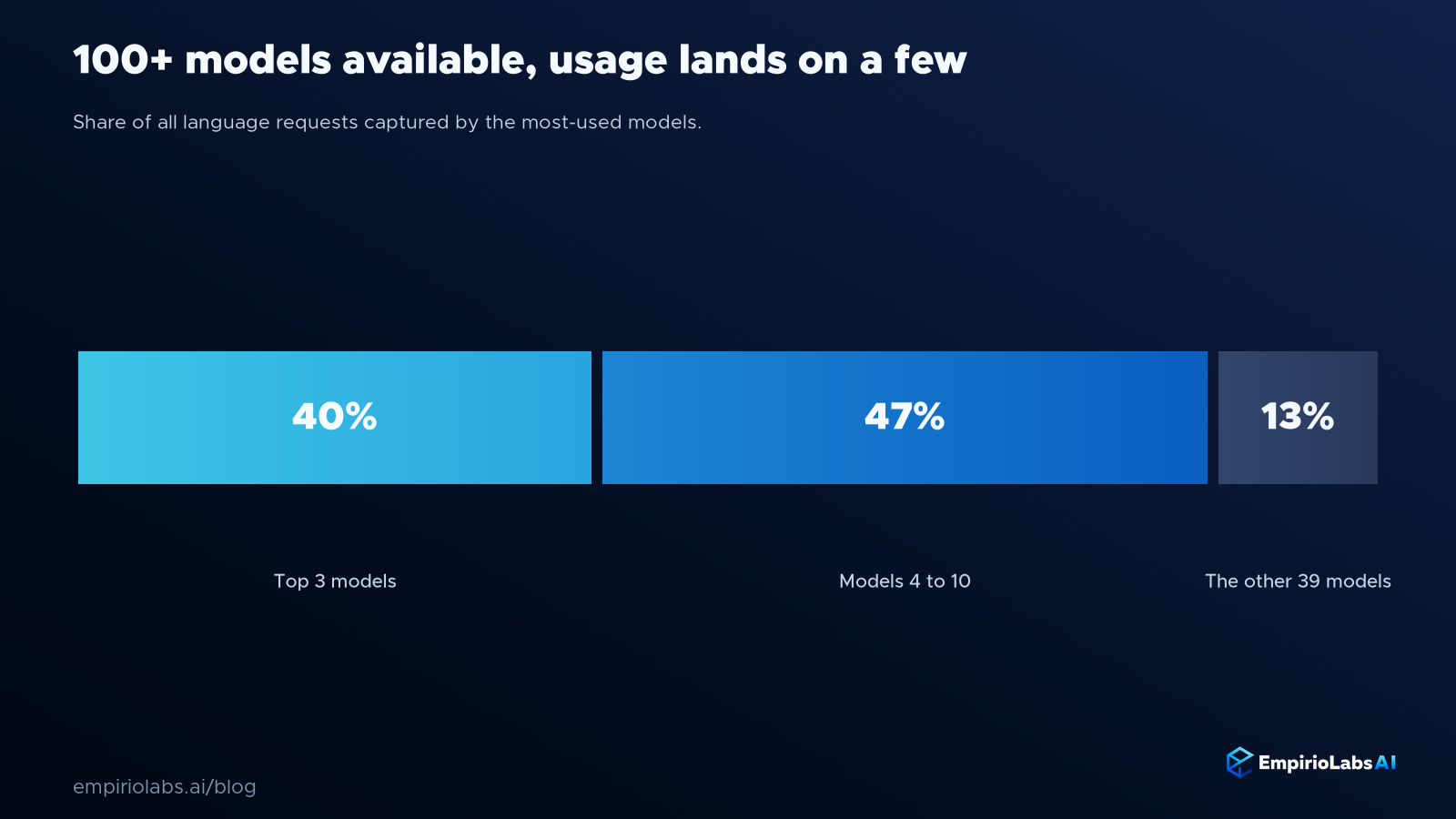
यह एकाग्रता पहले दिखाई देने की तुलना में अधिक मायने रखती है। इसका मतलब है कि मुट्ठी भर मॉडल चुपचाप आधार रेखा निर्धारित कर रहे हैं कि डेवलपर्स गुणवत्ता, गति और कीमत पर क्या उम्मीद करते हैं। एक नया मॉडल पूरे क्षेत्र के खिलाफ प्रतिस्पर्धा नहीं करता है। यह शीर्ष पर छोटी सूची के खिलाफ प्रतिस्पर्धा करता है, और यदि यह उन मॉडलों को वास्तविक कार्य पर हरा नहीं सकता है, तो यह कागज पर कैसा भी बेंचमार्क करता है, इसकी परवाह किए बिना यह पूंछ में रहता है।
सबसे अधिक उपयोग किए जाने वाले मॉडल
सभी भाषा उपयोग के हिस्से के आधार पर रैंक किया गया, कोई भी मॉडल इसके साथ भागता नहीं है। Z.ai के GLM मॉडल, MiniMax M3, Xiaomi के MiMo, और DeepSeek के तेज़ मॉडल शीर्ष पर हैं, प्रत्येक एक समान टुकड़ा लेते हैं, जबकि बाकी कैटलॉग एक लंबी पूंछ में भरता है। यह एक प्रमुख विजेता के बजाय एक प्रतिस्पर्धी शीर्ष समूह है, जो स्वस्थ है: इसका मतलब है कि डेवलपर्स एकल डिफ़ॉल्ट के बजाय सक्रिय रूप से विकल्पों की तुलना कर रहे हैं।
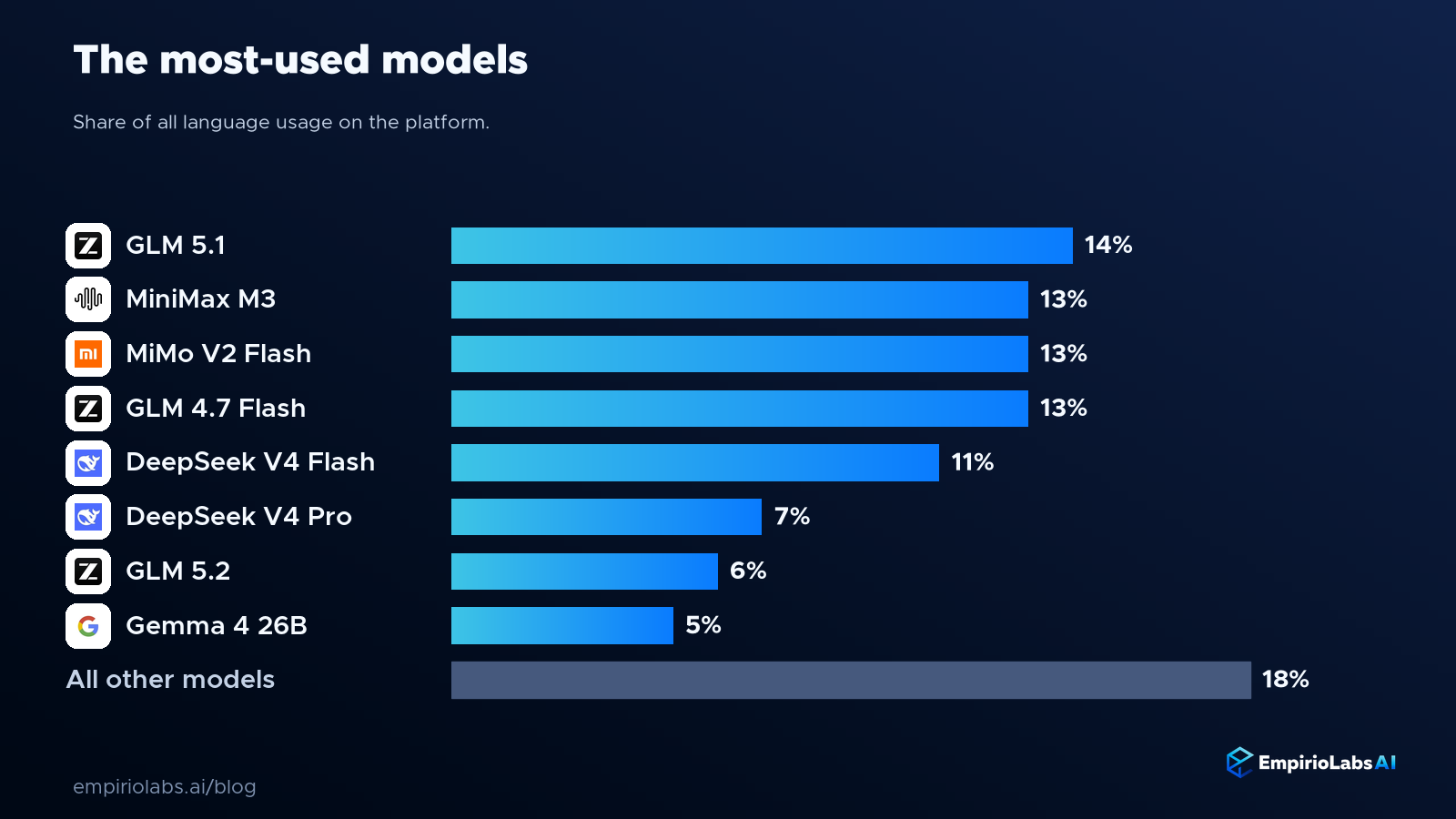
इस तरह का कच्चा उपयोग प्रश्न पर केवल एक लेंस है। यह आपको बताता है कि अनुरोध मात्रा कहां जाती है, जो उपयोगी है, लेकिन वॉल्यूम मुट्ठी भर भारी उपयोगकर्ताओं में केंद्रित हो सकता है और यह यह नहीं बताता है कि एक मॉडल को व्यापक रूप से कितना अपनाया जाता है। उसके लिए, हम आगे देखते हैं कि प्रत्येक निर्माता को कितने अलग-अलग डेवलपर्स चुनते हैं, जो कि लोग वास्तव में क्या चुनते हैं, इसका अधिक लोकतांत्रिक दृष्टिकोण है।
यह वरीयता है, न कि केवल उपलब्धता
लोकप्रियता रैंकिंग पर पीछे हटना उचित है। यदि कोई कैटलॉग एक निश्चित तरीके से झुकता है, तो उपयोग का पालन करना होगा, इसलिए लोकप्रिय मॉडलों की एक सूची बस यह दर्शा सकती है कि एक मंच ने स्टॉक करने का क्या फैसला किया है। वास्तविक वरीयता को उपलब्धता से अलग करने के लिए, हमने प्रत्येक निर्माता के उपयोग के हिस्से की तुलना कैटलॉग के अपने हिस्से से की।
दोनों के बीच का अंतर ही असली संकेत है, और यह हड़ताली है। Z.ai उपलब्ध मॉडलों का एक छोटा सा अंश बनाता है, फिर भी उपयोग का सबसे बड़ा हिस्सा लेता है। डीपसीक, मूनशॉट और श्याओमी सभी कैटलॉग में अपने पदचिह्न की भविष्यवाणी की तुलना में कहीं अधिक उपयोग करते हैं। उसी समय, अब तक उपलब्ध सबसे अधिक मॉडल वाले निर्माता, अलीबाबा, उपयोग का केवल एक मामूली हिस्सा देखता है, और अमेज़ॅन से एक अच्छी तरह से स्टॉक किए गए लाइनअप को मुश्किल से छुआ जाता है।
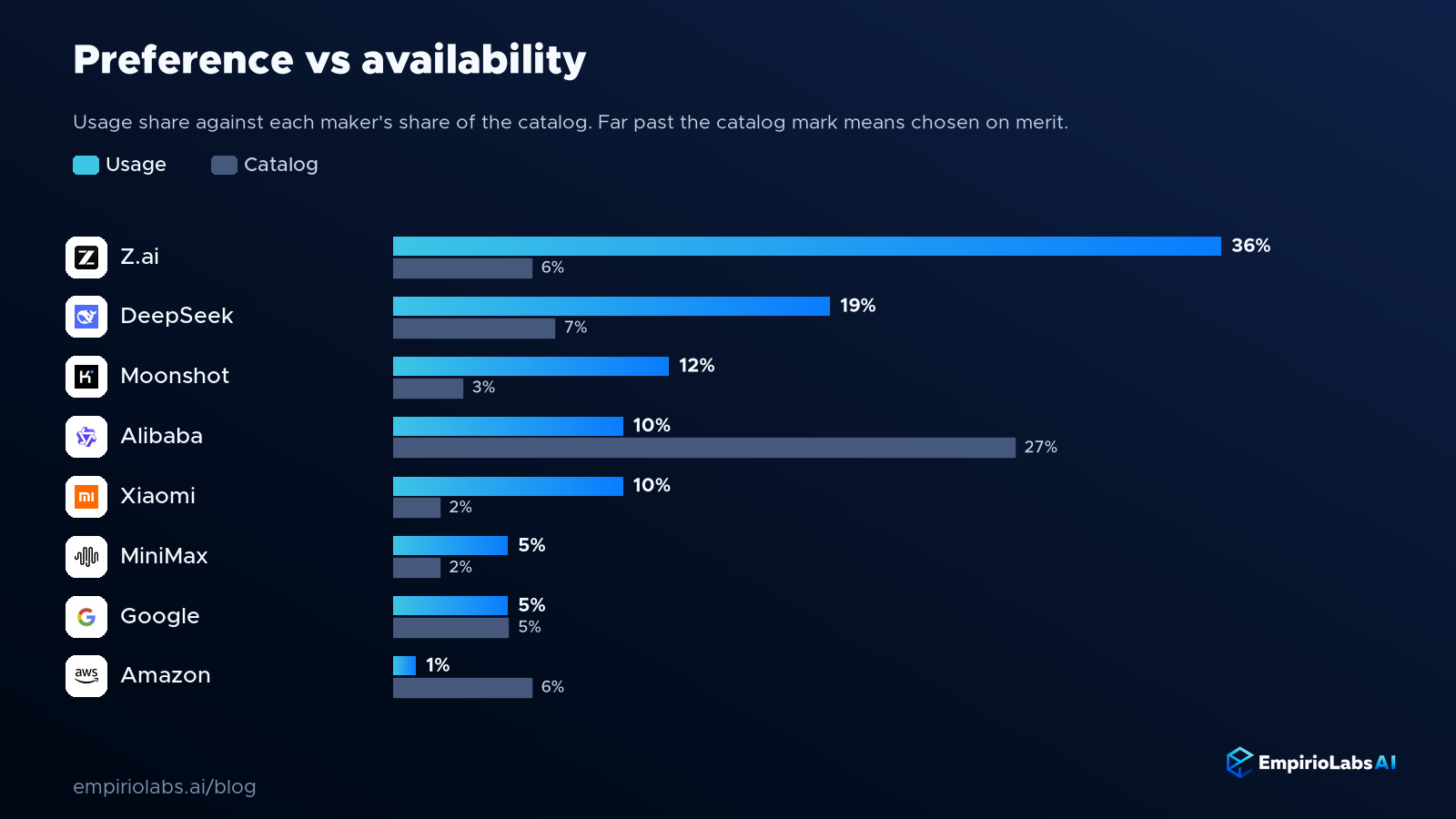
दूसरे शब्दों में, डेवलपर्स केवल वही उपयोग नहीं कर रहे हैं जो उनके सामने रखा गया है। वे सक्रिय रूप से मॉडलों के एक विशिष्ट सेट तक पहुंच रहे हैं और दूसरों से गुजर रहे हैं जो समान रूप से उपलब्ध हैं और कुछ मामलों में, कहीं अधिक संख्या में हैं। उपलब्धता नियति नहीं है। एक बड़ी कैटलॉग उपस्थिति तब तक उपयोग में तब्दील नहीं होती है जब तक कि मॉडल इसे वास्तविक काम पर अर्जित नहीं करते हैं, और यही वह खोज है जिसके साथ हर मॉडल लैब को बैठना चाहिए।
प्रयोगशालाओं का एक छोटा समूह मांग का मालिक है
यह अधिक लोकतांत्रिक दृष्टिकोण, यह गिनती करते हुए कि कितने डेवलपर्स कच्चे अनुरोध की मात्रा की गिनती करने के बजाय प्रत्येक निर्माता को अपने डिफ़ॉल्ट के रूप में चुनते हैं, मांग को एक छोटी सूची में केंद्रित करता है। Z.ai स्पष्ट अंतर से आगे है, उसके बाद डीपसीक और मूनशॉट हैं, जबकि अलीबाबा, श्याओमी और मिनीमैक्स पीछे हैं। बाकी सभी को मिलाकर एक छोटा सा शेष है।
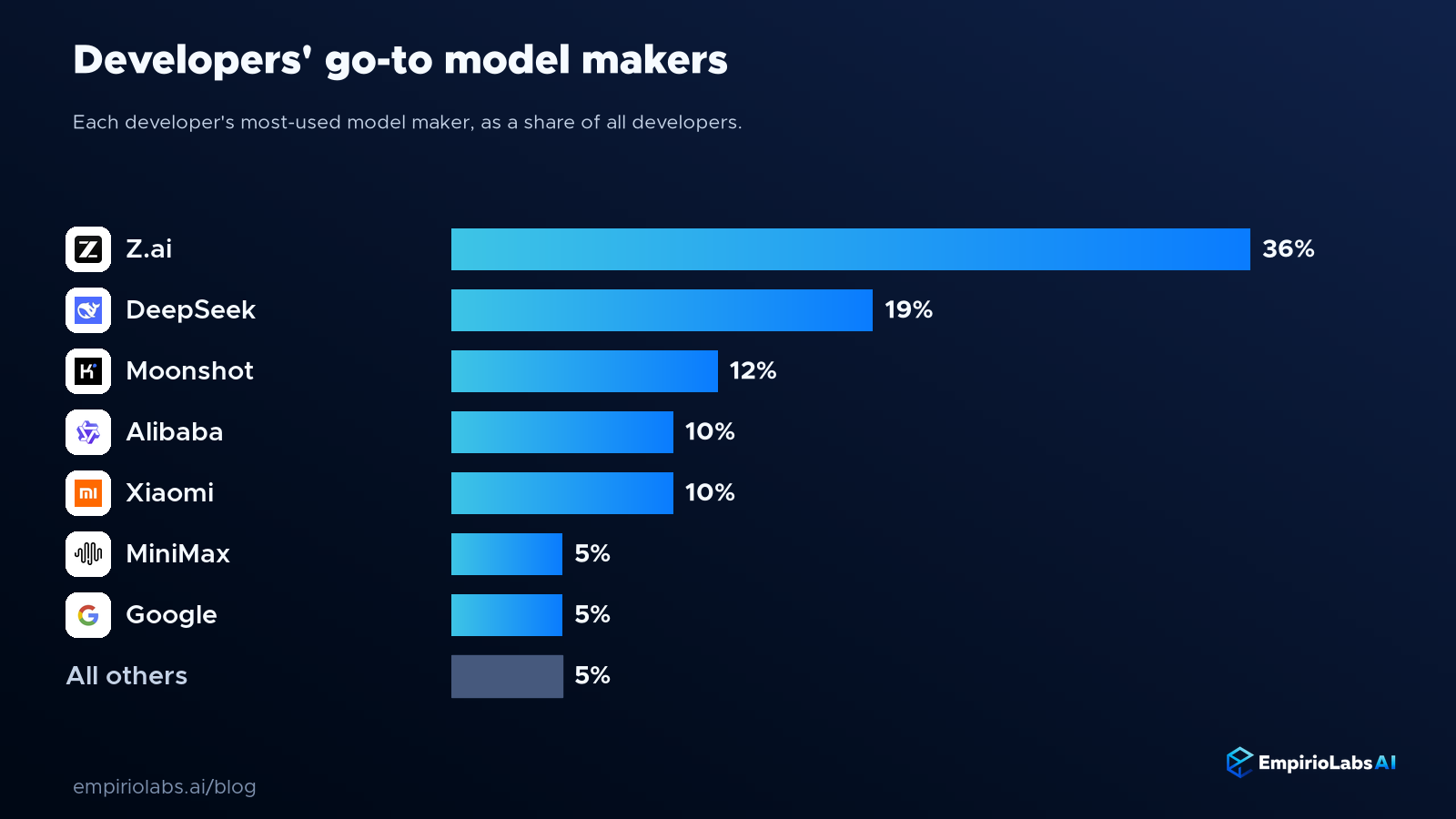
नेताओं को जो एकजुट करता है वह मार्केटिंग बजट या घरेलू नाम नहीं है। यह मजबूत, खुले तौर पर उपलब्ध मॉडलों को तेज गति से शिप करने की इच्छा है। डेवलपर का ध्यान जीतने वाली प्रयोगशालाएं, अधिकांश भाग के लिए, सक्षम मॉडल जारी कर रही हैं जिनका टीमें निरीक्षण कर सकती हैं, अनुकूलन कर सकती हैं और सस्ते में चला सकती हैं, और वे उम्मीदों में वृद्धि के रूप में छोटी सूची में बने रहने के लिए पर्याप्त रूप से पुनरावृत्ति कर रहे हैं।
गति आकार को मात देती है
एक आम धारणा है कि डेवलपर्स सबसे बड़े, सबसे स्मार्ट मॉडल तक पहुंचते हैं जिसे वे वहन कर सकते हैं। उपयोग डेटा अन्यथा कहता है। हमने मॉडलों को दो समूहों में विभाजित किया है: हल्के वेरिएंट, जिसका अर्थ है फ्लैश, मिनी और लाइट संस्करण गति और कम लागत के लिए बनाए गए हैं, और पूर्ण आकार के मॉडल। अधिकांश भाषा अनुरोध हल्के वेरिएंट में जाते हैं।
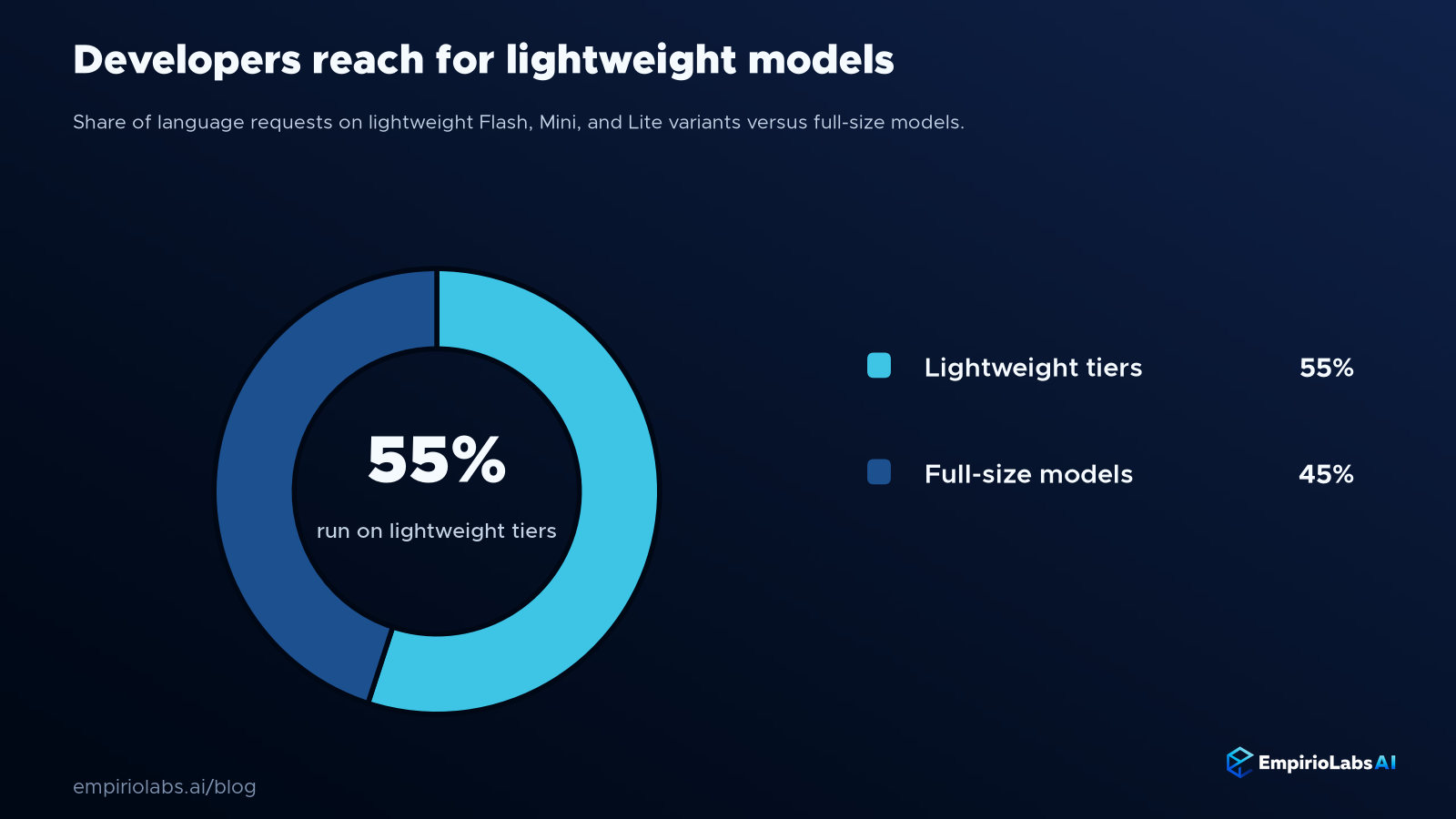
यह एक तर्कसंगत प्रतिक्रिया है कि वास्तविक अनुप्रयोग कैसे काम करते हैं। अधिकांश उत्पादन कार्यों, जैसे वर्गीकरण, निष्कर्षण, रूटिंग, सारांश और छोटी पीढ़ी के लिए एक सीमांत मॉडल की आवश्यकता नहीं होती है, और एक तेज़, सस्ता मॉडल जो समय के एक अंश में उत्तर देता है, बेहतर इंजीनियरिंग विकल्प है। बड़े मॉडल वास्तव में कठिन समस्याओं के लिए आरक्षित रखे जाते हैं, डिफ़ॉल्ट रूप से नहीं पहुंचे जाते हैं। अपने विलंबता बजट और उनके बिल दोनों को देखने वाली टीमों के लिए, यह वृत्ति भरोसा करने लायक है।
पाठ से परे: डेवलपर्स क्या उत्पन्न करते हैं
उपयोग केवल भाषा के बारे में नहीं है। मीडिया पीढ़ी की ओर मुड़ते हुए, पैटर्न उतने ही केंद्रित हैं जितने कि वे पाठ के लिए हैं। छवि निर्माण लगभग पूरी तरह से एक ही मॉडल के माध्यम से चलता है। वीडियो मुख्य रूप से क्लिंग और सीडांस के बीच विभाजित है। ऑडियो कार्य, विशेष रूप से, संश्लेषण के बजाय प्रतिलेखन का प्रभुत्व है, जो इस बारे में कुछ कहता है कि टीमें आज ऑडियो मॉडल का उपयोग कैसे करती हैं: नई ध्वनि बनाने की तुलना में मौजूदा ध्वनि को समझने के लिए अधिक।
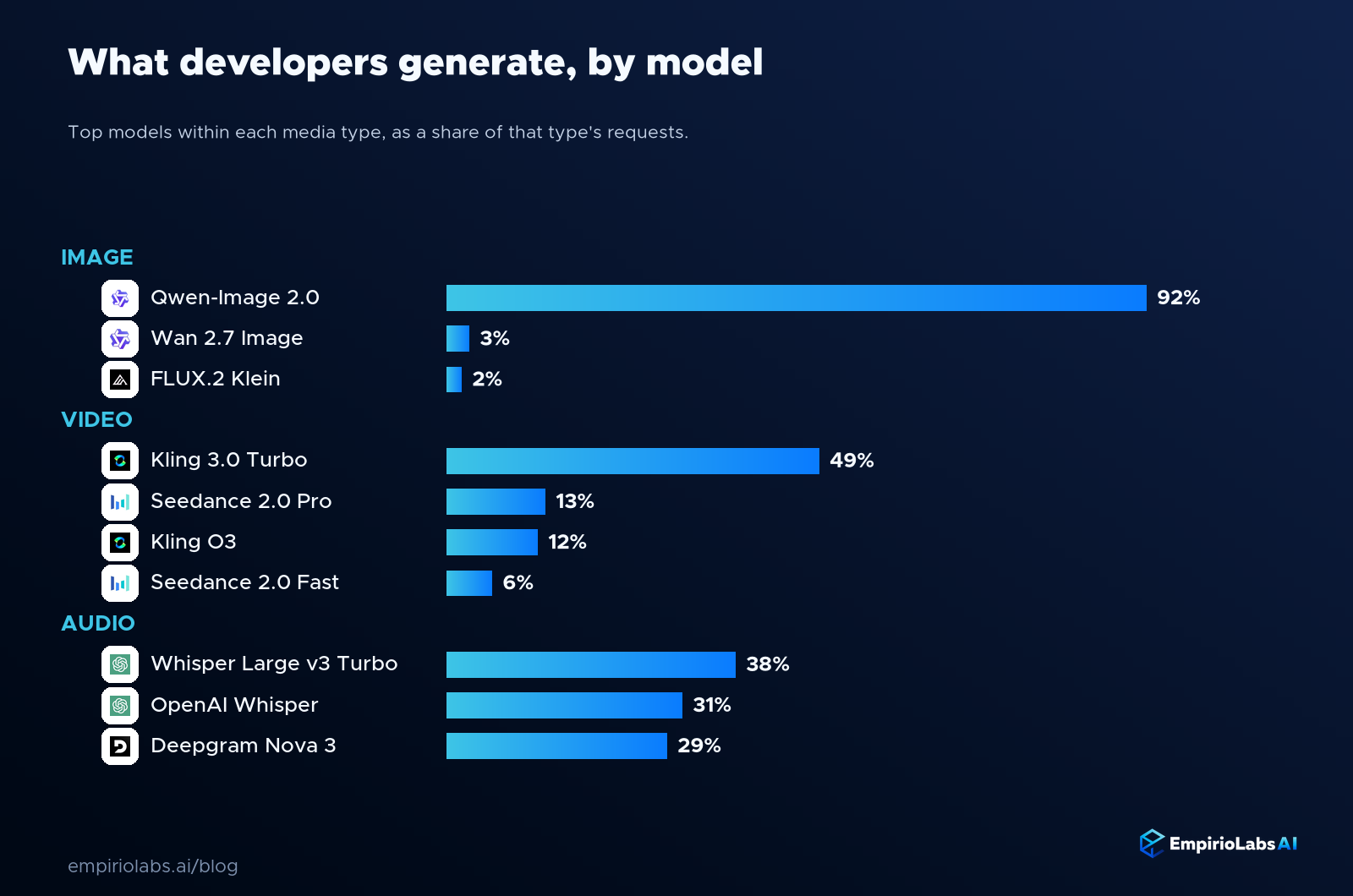
हर तौर-तरीके में एक ही नियम लागू होता है। मॉडलों की एक छोटी सूची अधिकांश काम करती है, और बाकी क्षेत्र जो बचा है उसके लिए प्रतिस्पर्धा करता है।
यदि आप एक मॉडल चुन रहे हैं तो इसका क्या मतलब है
इस सब के माध्यम से चलने वाला व्यावहारिक सबक प्रति कार्य चुनना है, प्रति ब्रांड नहीं। प्लेटफॉर्म पर सबसे अधिक उपयोग किए जाने वाले मॉडल सबसे प्रसिद्ध नहीं हैं। वे वे हैं जो किसी विशिष्ट कार्य के लिए लागत, गति और गुणवत्ता पर वास्तविक मूल्यांकन जीतते हैं। कुछ आदतें सीधे डेटा से अनुसरण करती हैं:
- तेज़, हल्के स्तर से शुरू करें और केवल तभी आगे बढ़ें जब कार्य को वास्तव में एक बड़े मॉडल की आवश्यकता हो। अधिकांश काम नहीं करते हैं।
- ओपन-वेट मॉडल का गंभीरता से मूल्यांकन करें। वास्तविक उपयोग पर वे एक समझौता विकल्प नहीं हैं, वे उत्पादन कार्य के लिए डिफ़ॉल्ट विकल्प हैं।
- यह न मानें कि सबसे बड़ा कैटलॉग नाम सबसे उपयुक्त है। उपलब्धता और गुणवत्ता अलग-अलग चीजें हैं, और उपयोग डेटा डेवलपर्स को उनके साथ इस तरह से व्यवहार करते हुए दिखाता है।
- अपने डिफ़ॉल्ट को नियमित रूप से फिर से जांचें। क्षेत्र के शीर्ष के साथ यह प्रतिस्पर्धी, किसी कार्य के लिए सबसे अच्छा मॉडल एक तिमाही से दूसरी तिमाही में बदल सकता है।
टेकअवे
2026 में वास्तविक एआई उपयोग की कहानी अभिसरण और विकल्प है। डेवलपर्स के पास पहले से कहीं अधिक मॉडल उपलब्ध हैं, और वे नई पीढ़ी की प्रयोगशालाओं से तेज, सक्षम मॉडल के एक छोटे से सेट पर ध्यान केंद्रित करके प्रतिक्रिया देते हैं। सबसे महत्वपूर्ण बात यह है कि वे उन मॉडलों को योग्यता के आधार पर चुनते हैं, न कि इस वजह से कि कोई मंच क्या पेशकश करता है। सबसे बड़ी कैटलॉग उपस्थिति नहीं जीतती है। नौकरी के लिए सबसे अच्छा मॉडल करता है, और तेजी से वह मॉडल खुला, तेज और सस्ता होता है।
आप पूरे कैटलॉग में हर मॉडल, तौर-तरीके और लाइव कीमत की तुलना कर सकते हैं EmpirioLabs मॉडल पेज।.
प्रकटीकरण: यह लेख एआई सहायता के साथ लिखा गया था और EmpirioLabs AI द्वारा समीक्षा की गई थी।.